




The evolution of the dental cutter
Let's tell patients that we offer quality services, that they should come to our clinic for a wonderful smile or brighter teeth? We hope our current or potential patients already know this...
Let's tell patients that we offer quality services, that they should come to our clinic for a wonderful smile or brighter teeth? We hope our current or potential patients already know this...

The historian and sociologist Roy Potter writes: “By providing access to the body's sounds – breath, blood pulsing around the heart – the stethoscope changed the approach to internal diseases and, consequently, the doctor-patient relationship.…

TISSUE REGENERATION THROUGH PLATELET-RICH PLASMA (PRP) INJECTION, ALSO USED IN DENTISTRY This is a revolutionary treatment based on a simple idea: to use for...

Tartar is a yellowish-brown, mineralised organic structure that affects the surface of teeth and hard surfaces in the mouth. Commonly known as “calculus”, tartar is actually the result of the mineralisation process of plaque.
Plaque doesn't spare anyone! It can appear in children with milk teeth, adolescents, adults, and even the elderly with prosthetic appliances.
It forms on all hard surfaces in the oral cavity, on crowns, on fillings, and on dental appliances.
Tartar generally appears in areas bathed abundantly by saliva, i.e. on the lower incisors and the buccal surfaces of the upper posterior teeth.
The lower teeth suffer more from tartar deposits because the saliva produced by the sublingual glands is richer in salts.
Initial, incompletely mineralised tartar is soft in consistency, is removed quite easily, and its colour is yellowish-white. As mineral sediments are deposited, it calcifies and is pigmented, taking on a brownish-maroon colour.
This mineralised deposit presents in two clinical forms: supragingival calculus and subgingival calculus.

A beautiful smile is maintained by following certain rules of oral hygiene. Adopting correct measures for cleaning the oral cavity primarily means healthy teeth without food debris, without inflamed gums, without cavities, and without bad breath.
The rules for cleaning teeth and gums are simple, but each operation must be thoroughly performed to achieve the desired results. The most important rules for oral hygiene that prevent the formation of bacterial plaque and tartar are those of prevention, control and professional cleaning. These should be complemented by other measures, such as fluoride and vitamin treatments, as well as adopting a correct diet plan.

Dental caries are diseases of tooth tissue. They occur when the tooth enamel cracks, allowing bacteria to develop. The resulting bacterial colonies affect the hard tissue and lead to the formation of holes in the teeth and molars.
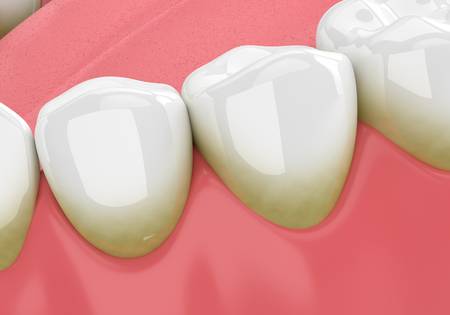
Bacterial plaque, also known as dental plaque, is a whitish-yellowish substance, characterised by a soft, very adherent consistency, which deposits on the hard surfaces in the oral cavity. Bacterial plaque is found on the surface of the teeth, in the interdental spaces, on the gums, on prosthetic surfaces, on the surfaces of prosthetic abutments and even on dental debris.

Good oral health is an essential part of your overall health and well-being. The New Year is an excellent time to set resolutions for establishing healthy habits that target oral health.
(more…)

“Quality is the cornerstone upon which our company and its reputation for success have been built. It also provides the foundation upon which we will build our future. As dentistry evolves, the need for high-quality products and solutions does not change.” declared recently Mr Hans Geiselhöringer, president of Nobel Biocare and Dental Imaging companies.
(more…)

Through its innovative products, both in terms of aesthetics and functionality, Megagen Implants today plays an important role in the global dental market, as a result of the positive changes and the even greater good it produces. The AnyRidge implant, also known as the 21st-century implant, is the result of the experience and dedicated work of the research and development department within Megagen Implants.
(more…)